Assessment Philosophy
Assessment is an essential part of effective teaching. The artifacts on this page demonstrate how I use a variety of assessments to monitor student progress, inform instruction, and support student learning and growth.
TPE 5.1 – Assessing Student Learning
-
Focus: Understanding and applying multiple types of assessments to evaluate student learning.
Artifact 1/Personal Philosophy of Assessment
This artifact outlines my philosophy that assessment should guide instruction and support student learning. It explains how I use a variety of assessments to monitor progress, identify learning needs, and adjust instruction to support student growth.
Artifact 2/ Print Concepts
This artifact demonstrates how I assess students’ understanding of basic print concepts such as letter recognition, word awareness, and how print works in written language. Monitoring print concepts allows me to identify whether students have developed foundational literacy skills that support reading development.


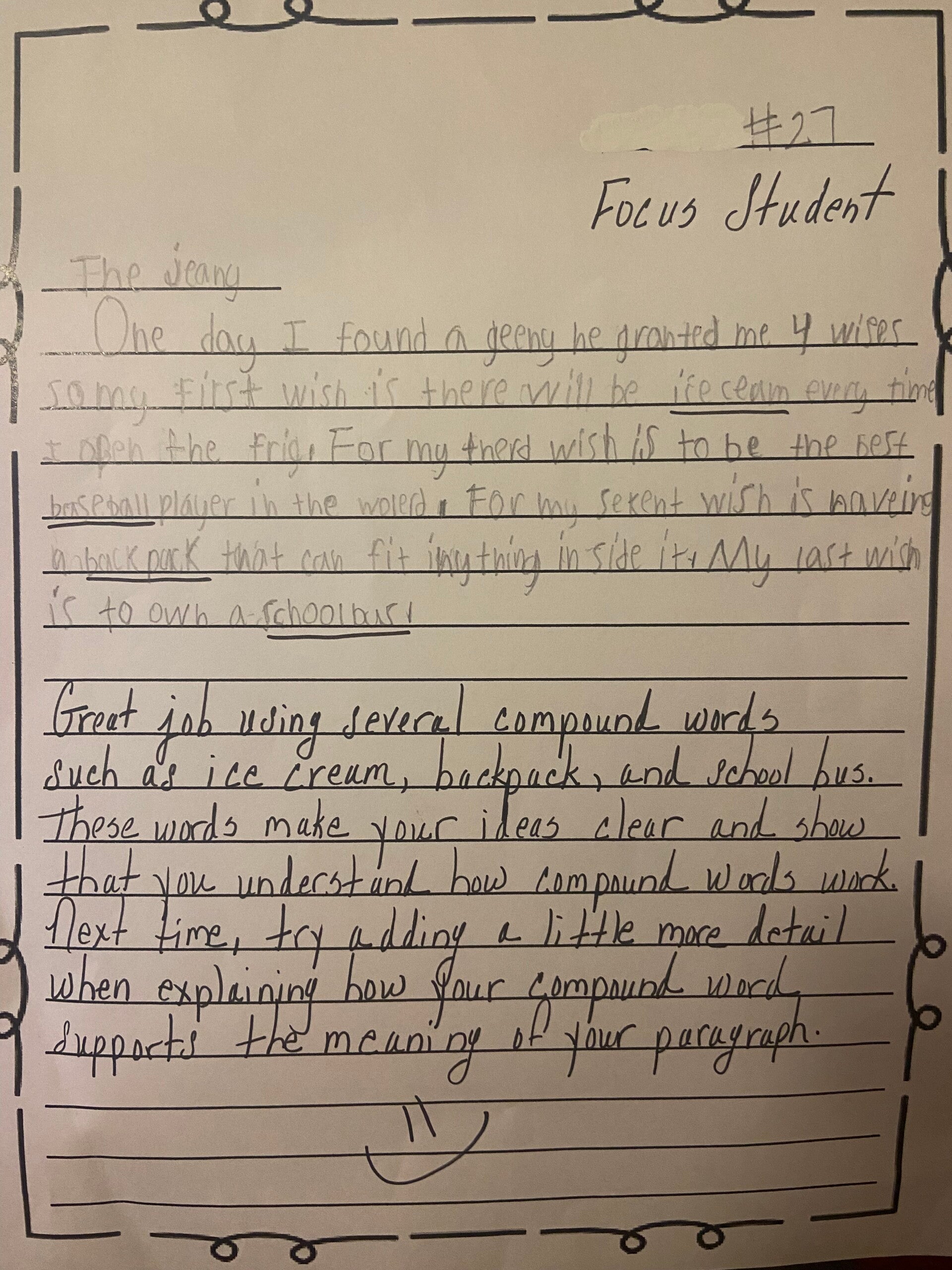
Artifact 3/Focus Student Compound Word Writing Assessment
This artifact shows an example of a focus student’s writing from a compound word paragraph assessment. Students were asked to write a short paragraph using compound words from a classroom word bank. This assessment allowed me to evaluate students’ ability to correctly apply compound word spelling and meaning within their writing. The focus student used a color-coded compound word reference chart as a scaffold to support identification and spelling while maintaining grade-level expectations.


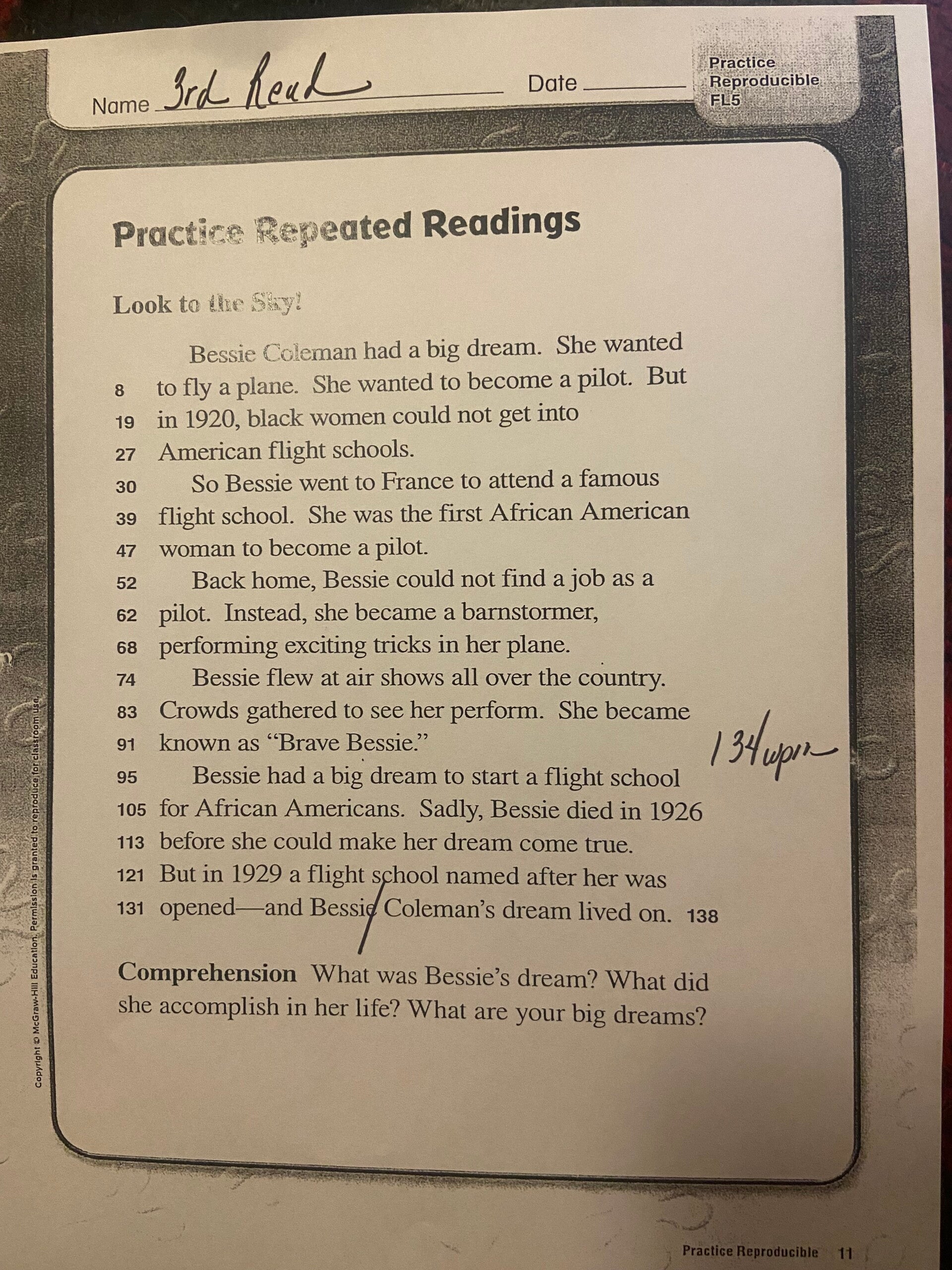
Artifact 4/Running Record Fluency Assessment
This artifact shows examples of running record assessments used to monitor student reading fluency and comprehension. During the assessment, students read a short passage aloud while I record their words-per-minute rate and observe reading behaviors. This information helps guide instruction and monitor student progress in reading fluency.